Tsielepis staff blow off steam on night cruise

Limassol - Tsielepis staff blew off some steam on a leisurely cruise along the Limassol coast aboard the catamaran Sail Away, last night. The night cruise included food, music with DJ Panos on the decks, and most importantly, an open bar. The Tsielepis staff ate, drank and danced the night away to the backdrop of the flickering lights of the gorgeous Limassol coastal line. There was not a single word spoken about work and the evening passed in laughter and bonhomie, draining away the stress of the daily routine at the office. Next up on the office social calendar is a visit to cigar lounge, Cohiba Atmosphere Nicosia, for food, drinks and Habanos and later in the month, a Karaoke Night.

Continue ReadingTsielepis staff blow off steam on night cruise

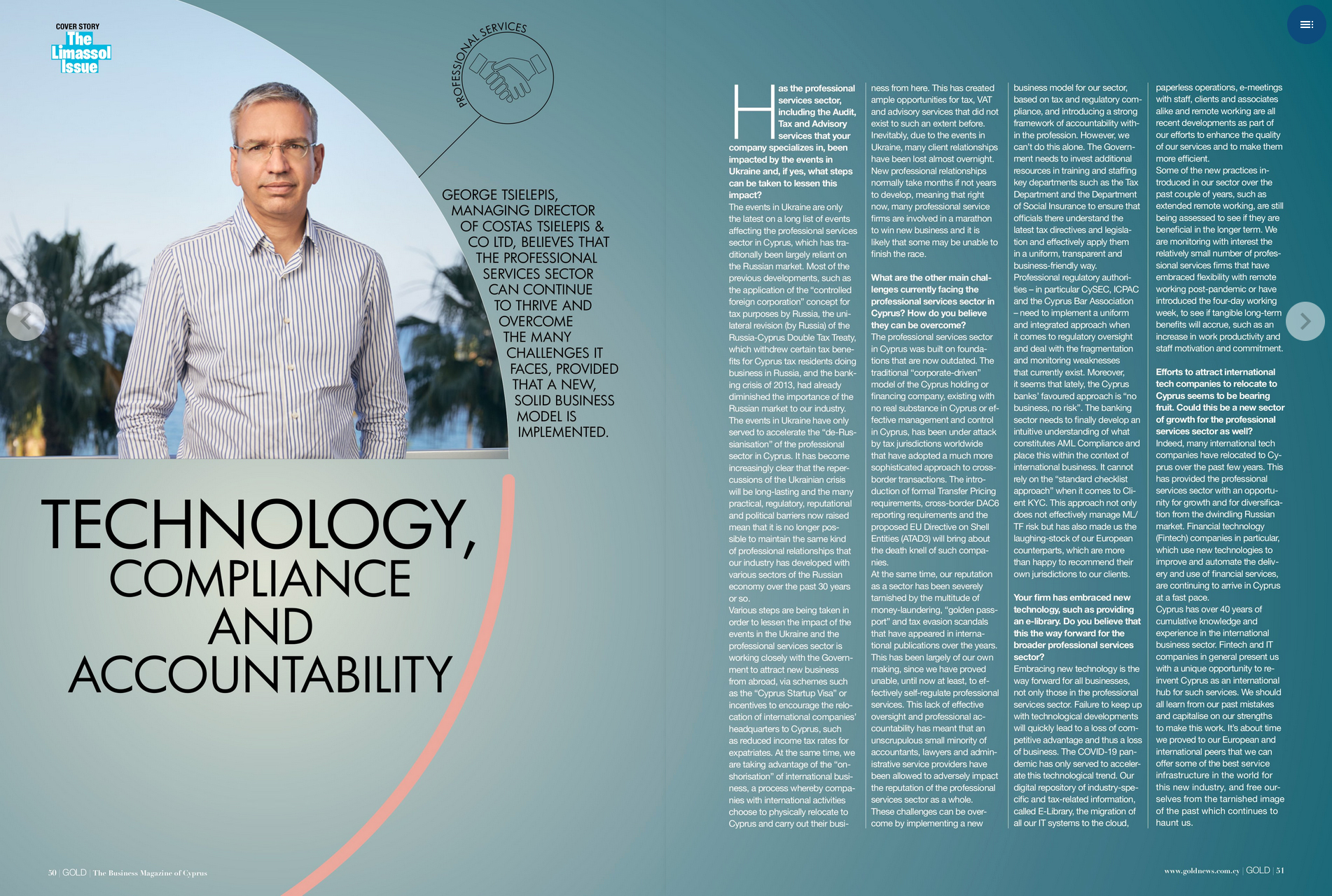
George Tsielepis featured in Gold magazine

Limassol – The Managing Director of Costas Tsielepis & Co Ltd, George Tsielepis, was featured in a special report on Limassol by Gold magazine earlier this month. Most of the issue, which came out on 19 June 2022, was dedicated to Limassol and featured insights from the city’s leaders in their respective fields, including trade & industry, professional services, real estate, tourism, technology etc. It also featured introductions from the Mayor of Limassol and the President of the Limassol Chamber of Commerce and Industry.  Tsielepis, whose interview appeared on page 50, spoke about the many challenges with which the professional services sector is currently faced, the island’s tarnished business reputation and ways to turn things around, the importance of new technology in businesses, the advent of technology companies, and especially FinTechs, on the island and much more. The outspoken Tsielepis predicted that “many professional service firms are involved in a marathon to win new business and it is likely that some may be unable to finish the race,” declared that “the professional services sector in Cyprus was built on foundations that are now outdated,” and that “it seems that lately, the Cyprus banks’ favoured approach is ‘no business, no risk’.” Read the interview, featured below, for more.

Continue ReadingGeorge Tsielepis featured in Gold magazine

Lebanese banks end operations in Cyprus

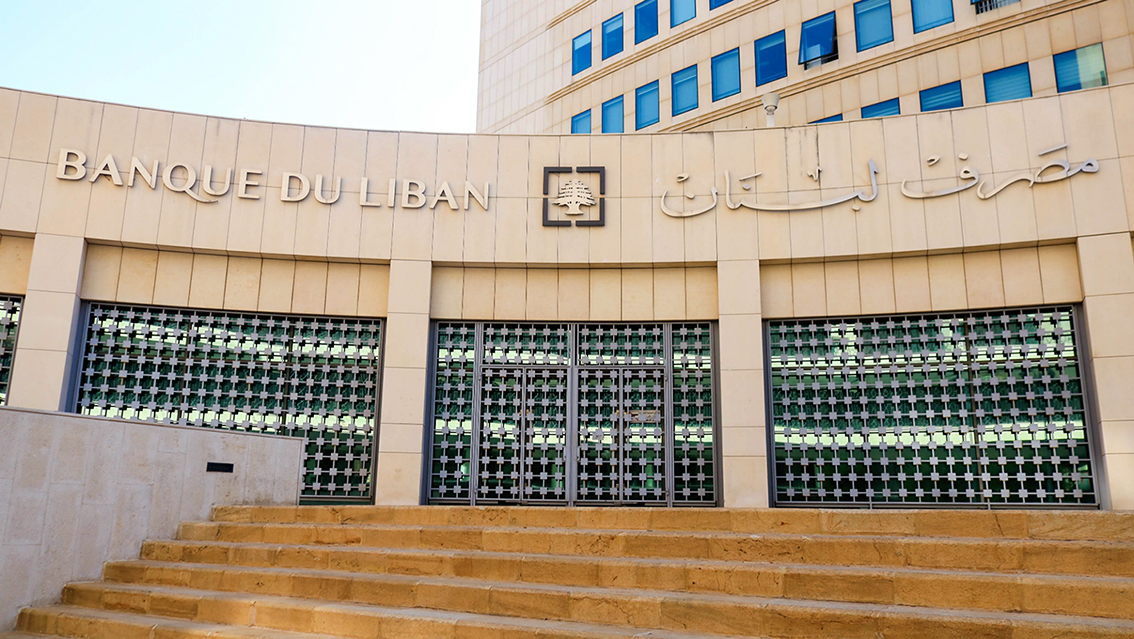
Nicosia - Lebanese banks are closing their branches in Cyprus, following a decision by the Lebanon Central Bank, according to a report by the Cyprus News Agency (CNA) released earlier this week. CNA said that Cyprus Central Bank (CBC) sources confirmed the decision by its Lebanese counterpart. In total, seven Lebanese bank branches are closing, with two branches of another two banks have already done so in the past, primarily due to the severe economic crisis currently ravaging Lebanon. The nine Lebanese banks are the Bank of Beirut, BankMed, Banque BEMO, BBAC, BLOM Bank, Byblos Bank, Credit Libanais, IBL Bank and LGB Bank. In April of this year, a report noted that the country’s gross domestic product fell to approximately $20.5 billion in 2021, having stood at roughly $55 billion in 2018. The World Bank said at the time that such a severe downturn is most often the result of wars, adding that the crisis is one of the worst seen on the global stage since the mid-19th century. Regarding the repercussions of the decisions for Cyprus, the Central Bank said that it has been monitoring the situation since 2019 when the situation in Lebanon started to deteriorate. Seeking to avoid any detrimental effects on the Cypriot banking system, the CBC first imposed a limit on the amount of savings in Lebanese banks in Cyprus that would qualify for the deposit guarantee scheme. The measure came into effect in November of 2019. Subsequently, in March of 2020, the Central Bank decided that Lebanese bank branches should transfer to the CBC an equal amount of liquidity to the amount needed to guarantee any deposits. This would ensure that in the event of any issues faced by the banks, there would be enough cash available to pay the guaranteed deposits, meaning those under €100.000, thus protecting the local banking system. In relation to this measure, financial statements of Lebanese banks had shown that a large part of the liquidity received by their branches in Cyprus was placed at the headquarters of the parent organisation in Lebanon. With the Lebanese banks facing a host of problems, there was a risk that these debts would not be paid by the parent banks, resulting in the deposits having to be covered by the Cypriot deposit guarantee scheme. In March of 2021, the CBC also asked these branches to transfer additional liquidity in order to be able to cover 50% of non-guaranteed deposits, meaning those exceeding €100.000. Citing sources close to the issue, CNA said that the above measures resulted in deposits in Lebanese bank branches falling from €650 million at the end of 2019 to €400 million, twelve months later. In addition, in July of 2021, an amendment requested by the CBC gave it the power to undertake the exclusive management of the cash held by a bank in Cyprus, in order to pay the guaranteed deposits of its customers, in the event its bank license was to be revoked. According to the report, even…


Continue ReadingLebanese banks end operations in Cyprus

Cyprus to offer tax incentives to promote headquartering

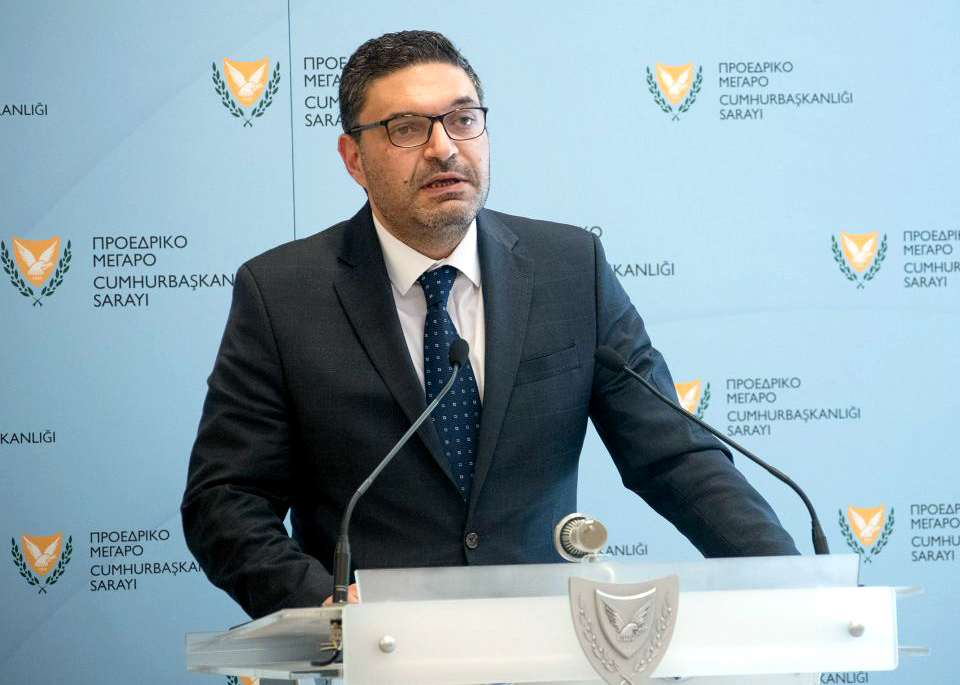
Nicosia - The Cypriot government approved yesterday a bill with tax incentives aiming to attract talent and promote headquartering in Cyprus, in line with the Strategy for Attracting Businesses for Activities or/and Expansion of their Activities in Cyprus approved by the Council of Ministers in October 2021. In a statement following a Cabinet meeting, Finance Minister, Constantinos Petrides, said that the Ministry of Interior is expected to table a bill granting visas and work permits to spouses of professionals that opt to relocate in Cyprus, as well as the operation of a One-Stop-Shop. “We are convinced that this programme is one of the most competitive in the EU and already, there is a huge interest particularly from high tech companies which in recent years have selected Cyprus as the place to relocate their headquarters,” Petrides said, adding “we are certain that this bill will further boost the development of this sector which constitutes a strategic aim for the government.” The bill provides for the reduction of the minimum required salary from €100.000 to €55.000 per annum (p.a). For existing employees, the bill provides for a 50% tax break on remuneration from employment earning €55.000 p.a. exercised in Cyprus by individuals already in Cyprus, provided that prior to the commencement of their employment in Cyprus they was abroad for 12 consecutive years. The bill also provides a grace period of six months for obtaining the benefit, while the exemption will continue to apply for 17 years from the commencement of employment. For new employees, the bill provides a 50% tax deduction on remuneration exercised in Cyprus by an individual who was abroad for 12 consecutive years, while eligible persons should earn €55.000 p.a. For new employees the grace period amounts to two years for obtaining the benefit. The exemption will also be provided for 17 years from the commencement of employment. Petrides said the employees and businesses opting to relocate in Cyprus due to the plan will bring direct and indirect benefits to the Cypriot economy, while businesses are encouraged to relocate their administration to the Republic bringing “real infrastructure to the island.” “Through this relocation, the tax base and consequently the tax income is broadened,” he said.

Continue ReadingCyprus to offer tax incentives to promote headquartering

Latest version of ‘Cyprus VAT: An Overview’ released

Limassol - Chelco VAT Ltd has just released the most recent version of its definitive guide to Cyprus Value Added Tax (VAT), titled ‘Cyprus VAT: An Overview’. The Overview was updated in May 2022 and represents a valuable tool for professionals at all levels dealing with VAT in Cyprus. Authored by Managing Director of Chelco VAT, Alexis Tsielepis, and Director, Panayiotis Panayi, the Overview was first published in January 2015 and is updated annually. Throughout the Overview, reference is made to some of the more significant Interpretive Circulars issued by the Cyprus VAT Authorities, referenced by their numbers and dates of issue. To download the Overview in .pdf, you may click here:

Continue ReadingLatest version of ‘Cyprus VAT: An Overview’ released

Chelco Trustees launches all-new website

Limassol – Chelco Trustees Ltd has just released its all-new website at www.chelcotrustees.com. The Chelco Trustees website was redesigned and rebranded from the ground up. The website is easier to navigate and more search engine friendly. It incorporates the latest website technologies, securities and safeguards and is fully compatible with mobile devices, including mobile phones and tablets. Come on in!

Continue ReadingChelco Trustees launches all-new website

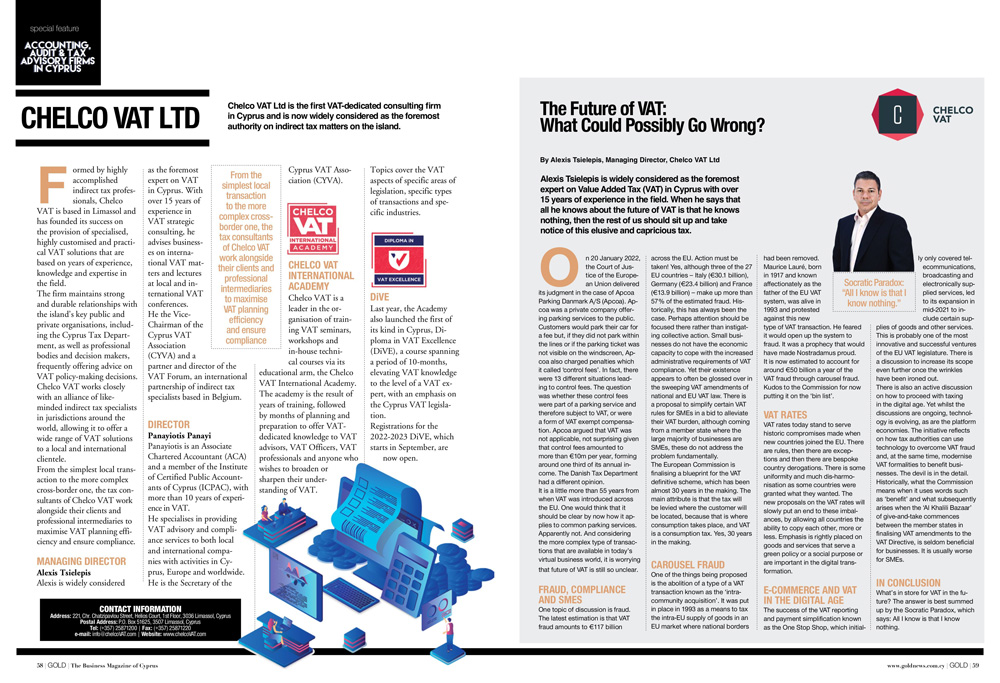
All I know is that I know nothing

Our own, Alexis Tsielepis, is widely considered as the foremost expert on Value Added Tax (VAT) in Cyprus with over 15 years of experience in the field. When he says that all he knows about the future of VAT is that he knows nothing, then the rest of us should sit up and take notice of this elusive and capricious tax. In an article published yesterday in Gold business magazine titled “The future of VAT: What could possibly go wrong?”, the outspoken Alexis talks about the paradoxes of VAT, saying that it is worrying that the future of VAT is still so unclear. On what’s in store for VAT in the future, he invokes the Socratic Paradox, which says: All I know is that I know nothing. Read Alexis’ comprehensive analysis here.

Continue ReadingAll I know is that I know nothing

RCB Bank shifts from banking to asset management

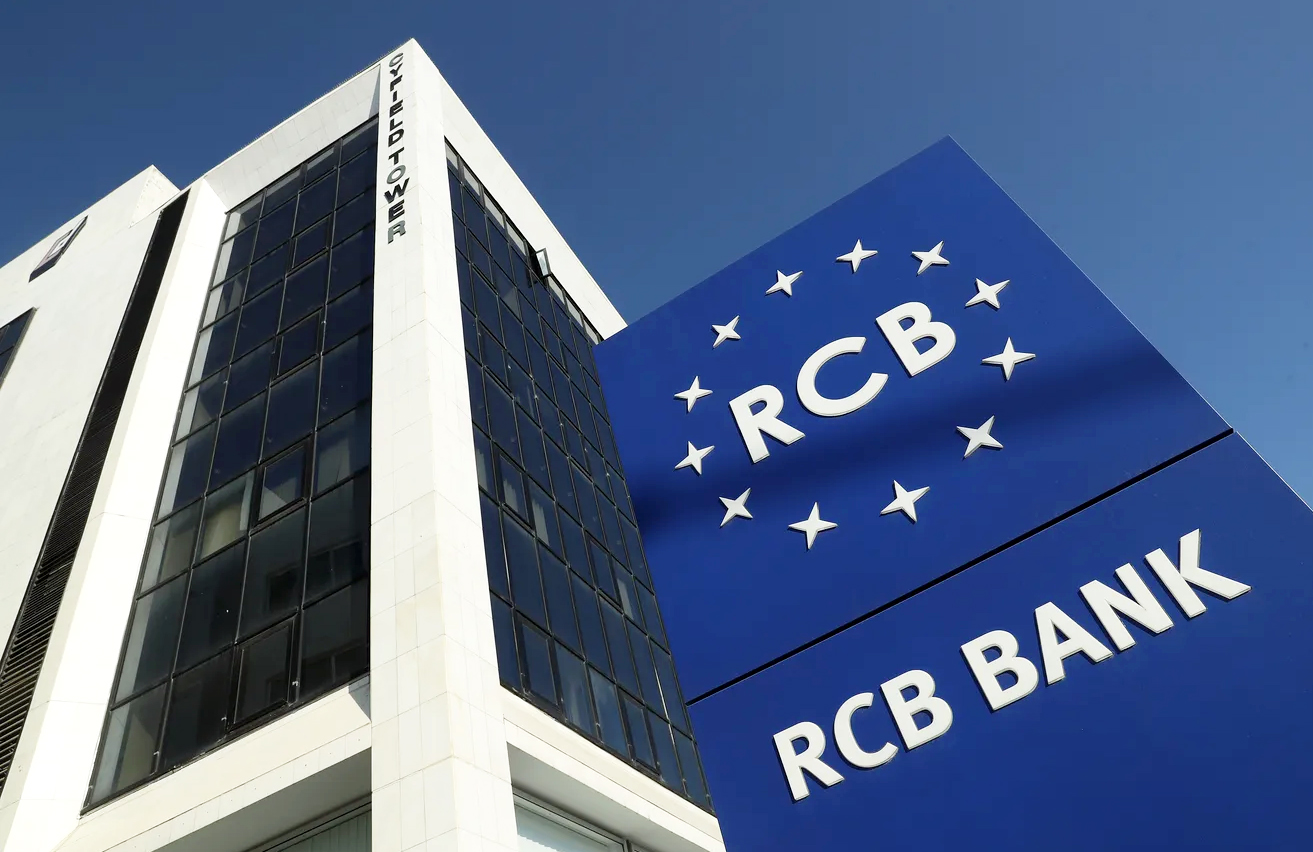
Limassol - RCB Bank announced last week that it will cease operating as a bank and would become an asset management company. The bank cited the “ongoing and extremely volatile geopolitical situation” as the key reason for its transformation and adoption of a new business model, despite its ample liquidity and capital, saying that this helped to ensure the best interests of its clients. The announcement came two days after the bank boosted its liquidity levels by selling a performing loan portfolio, worth €556mln to Hellenic Bank, with the approval of the European Central Bank (ECB). “The Bank will proceed with the full repayment of all its obligations towards its clients and continue focused on the management of the remaining assets,” RCB said in a statement issued on Thursday, 24 March, a month after the start of Russia’s invasion of Ukraine. “After the bank completes its shift away from accepting deposits and granting loans, it plans to transform into a regulated asset management company, given the substantial assets on its balance sheet,” RCB said, adding that “during this transformation process, RCB Bank will continue to service its existing clients and process all requests for payments or deposit transfers to accounts with other banks, meeting any current obligations.” Shortly after RCB’s announcement the ECB issued a release fully endorsing the decision “to voluntarily phase out its banking operations” and offering its assurances to depositors. The ECB announcement said: “The bank’s plan, which includes full repayment of all depositors, follows the impact of geopolitical risks on its operations since the Russian invasion of Ukraine.” The ECB decided “to appoint a temporary administrator to closely monitor RCB Bank’s liquidity position and capital position and to oversee the orderly repayment of its depositors.” The temporary administrator would not replace the current management body, but instead work with it for the orderly implementation of the bank’s voluntary phasing-out plan. There had been warnings for the bank, as there was an outflow of deposits after Russia’s invasion of Ukraine. Much of RCB’s business depended on the Russian market while the escalation of the war and broadening of sanctions increased the uncertainty about its future operations. RCB Bank (formerly Russian Commercial Bank) was founded in 1995 and is headquartered in Limassol, Cyprus, with branches in Nicosia and nine other locations. Russia’ 2nd largest bank, VTB owned a controlling stake in RCB until it sold all its shares to Cypriot shareholders in the midst of the economic effects caused by the war in Ukraine in February.

Continue ReadingRCB Bank shifts from banking to asset management

RCB Bank shifts from banking to asset management

Limassol - RCB Bank announced last week that it will cease operating as a bank and would become an asset management company. The bank cited the “ongoing and extremely volatile geopolitical situation” as the key reason for its transformation and adoption of a new business model, despite its ample liquidity and capital, saying that this helped to ensure the best interests of its clients. The announcement came two days after the bank boosted its liquidity levels by selling a performing loan portfolio, worth €556mln to Hellenic Bank, with the approval of the European Central Bank (ECB). “The Bank will proceed with the full repayment of all its obligations towards its clients and continue focused on the management of the remaining assets,” RCB said in a statement issued on Thursday, 24 March, a month after the start of Russia’s invasion of Ukraine. “After the bank completes its shift away from accepting deposits and granting loans, it plans to transform into a regulated asset management company, given the substantial assets on its balance sheet,” RCB said, adding that “during this transformation process, RCB Bank will continue to service its existing clients and process all requests for payments or deposit transfers to accounts with other banks, meeting any current obligations.” Shortly after RCB’s announcement the ECB issued a release fully endorsing the decision “to voluntarily phase out its banking operations” and offering its assurances to depositors. The ECB announcement said: “The bank’s plan, which includes full repayment of all depositors, follows the impact of geopolitical risks on its operations since the Russian invasion of Ukraine.” The ECB decided “to appoint a temporary administrator to closely monitor RCB Bank’s liquidity position and capital position and to oversee the orderly repayment of its depositors.” The temporary administrator would not replace the current management body, but instead work with it for the orderly implementation of the bank’s voluntary phasing-out plan. There had been warnings for the bank, as there was an outflow of deposits after Russia’s invasion of Ukraine. Much of RCB’s business depended on the Russian market while the escalation of the war and broadening of sanctions increased the uncertainty about its future operations. RCB Bank (formerly Russian Commercial Bank) was founded in 1995 and is headquartered in Limassol, Cyprus, with branches in Nicosia and nine other locations. Russia’ 2nd largest bank, VTB owned a controlling stake in RCB until it sold all its shares to Cypriot shareholders in the midst of the economic effects caused by the war in Ukraine in February.

Continue ReadingRCB Bank shifts from banking to asset management

Cyprus economy to suffer by sanctions on Russia

Cyprus’ GDP could be affected by between 1.5-2% during 2022 if Cypriot airspace remains closed to Russia for the entirety of 2022, rating agency DBRS Morningstar reported yesterday. “DBRS Morningstar estimates that Cyprus could lose 1.5-2% of Gross Domestic Product (GDP) in 2022 if the airspace closure is maintained for the whole year,” the report said, noting that “the impact will be much smaller if the restrictions are lifted before the summer season or if Russian tourists find alternative routes to Cyprus.” DBRS, the world's 4th largest credit ratings agency, also noted that despite the negative impact, the war in Ukraine will not derail the medium-term prospects of the Cypriot economy. In its report, DBRS said that the sanctions against Russia after its invasion of Ukraine, as well as the counter-sanctions imposed by Russia in retaliation, “have increased the negative risks to the otherwise strong medium-term economic prospects of Cyprus”, with the risks primarily linked to declining tourism revenues and higher energy prices. Recalling that the Russian market is the 2nd largest for Cyprus, the agency added that the ban on flights could reduce tourist arrivals by approximately 20-25% in 2022, although it believes that the Cypriot tourism industry will partially make up for it with tourists from other markets, including the United Kingdom. The report also points out that even if the sanctions on flights are short-lived, the arrivals of Russian tourists in Cyprus are expected to be seriously affected by the large impact of the sanctions on the Russian currency and economy. “It is clear that the tourism industry may face short-term pressures due to the setback in Russia, however, the comparative advantage of Cyprus, in terms of its attractiveness of tourists, will remain positive this year,” it added. DBRS Morningstar takes the view that the benefits stemming from the improving situation in relation to the coronavirus pandemic in Europe, as well as the stimulus measures provided by the EU, will mitigate the risks and continue to support Cyprus’ economic recovery. “DBRS Morningstar continues to believe that the medium-term prospects of Cyprus remain solid and the country is in a good position to manage and adapt to the situation, depending on the duration and depth of the crisis,” the report stated. At the same time, DBRS notes that “the European Commission’s forecast for a growth rate of 4.1 per cent in 2022 now looks optimistic.” According to data of the World Travel & Tourism Council the tourism sector contributed 13.8% to the Cypriot GDP in 2019. In addition to the potential impact on tourism from Russia, the rapid and significant increase in oil and gas prices would raise energy costs for the private sector. The agency said that petroleum products accounted for 90% of total available energy in Cyprus in 2019, adding that “the main risk is associated with higher prices, rather than supply disruption, as Cyprus imports about 1 per cent of its energy needs from Russia.” Furthermore, while Cyprus’ dependence on Russian energy is very low,…

Continue ReadingCyprus economy to suffer by sanctions on Russia